
Tecnomatix digital manufacturing software
Digitalize manufacturing and the process for turning your innovative ideas—from vehicles, aircraft and machinery to medical devices, electronics and consumer goods—into transformative products for your customers, right now.
Why Tecnomatix?
Build the digital twin
Model, simulate and optimize a comprehensive digital twin of your manufacturing processes—including robots, automation, material handling systems and people—to improve the performance of your business.
Increase flexibility
Use simulation and optimization for automated or manual production processes to evaluate and implement advanced manufacturing techniques, equipment and operations for more flexible manufacturing.
Innovate faster
Use a realistic and immersive, high-fidelity environment with physics-based modeling, simulation and optimization tools to speed your innovation.
Human-centered manufacturing
What gets us to the bottom of the ocean and into outer space? What keeps us safe and connected? Human-centered manufacturing.
Human-centered manufacturing helps you turn tomorrow’s innovations into transformative products, today. Using breakthrough technologies such as advanced robotics and artificial intelligence, it makes self-organizing factories a reality. Get a glimpse into tomorrow's manufacturing.
Explore Tecnomatix capabilities
Leverage digital manufacturing to improve your business now and sustain it for the future.


Get the latest news on the Tecnomatix blog
Electrolux
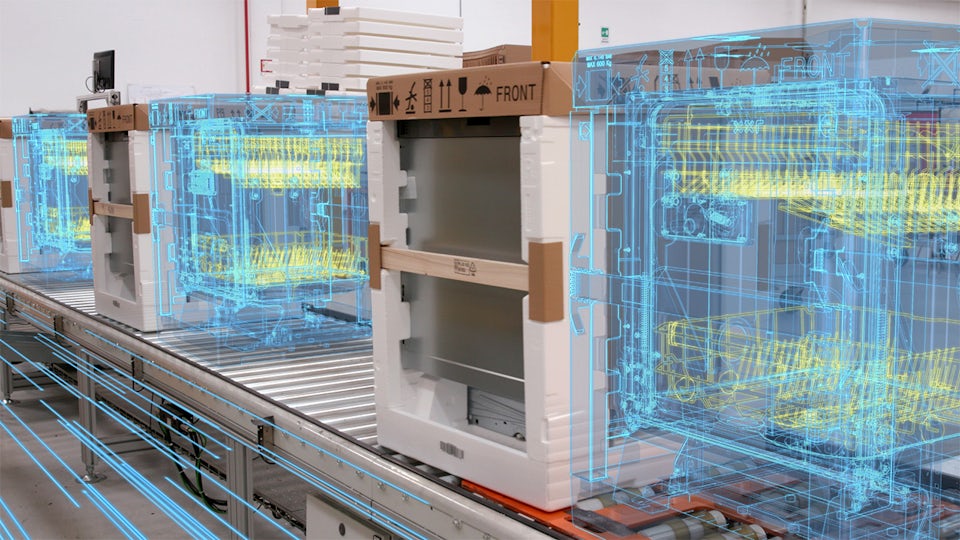
Teamcenter, Simcenter and Tecnomatix help reduce development time by 20 to 30 percent
Company:Electrolux
Industry:Consumer products & retail
Location:Stockholm, Sweden
Siemens Software:Simcenter 3D Solutions, Teamcenter, Tecnomatix
Explore Tecnomatix software product groups
Get the most out of your manufacturing processes and equipment using digital manufacturing software products.


